
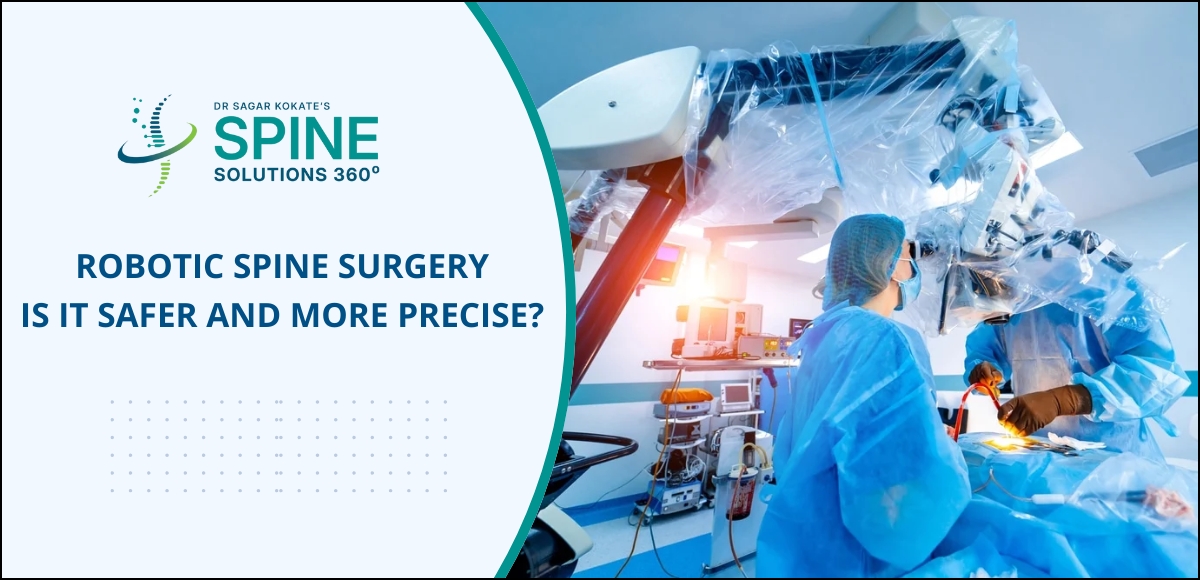
Robotic Spine Surgery: Is It Safer and More Precise?
What is Robotic Spine Surgery?
Robotic spine surgery involves using a robotic guidance system to assist surgeons in performing complex spinal procedures. The surgeon remains in full control, while the robotic system provides real-time navigation, precision tools, and 3D imaging to enhance accuracy. It’s not an autonomous robot performing surgery—rather, it’s a sophisticated tool that translates the surgeon’s plans into exceptionally precise actions.
The Promise of Precision
One of the most significant advantages of robotic spine surgery is its remarkable precision. Using pre-operative CT scans and real-time imaging, the system creates a detailed 3D map of the patient’s spine. This allows for:
- Sub-millimeter accuracy in instrument placement
- Optimal screw positioning in spinal fusion procedures
- Reduced margin of error compared to freehand techniques
- Customized surgical plans tailored to individual anatomy
Studies show that robotic assistance can improve pedicle screw placement accuracy to over 98%, significantly reducing the risk of misplaced hardware that could affect nerves or blood vessels.
Enhanced Safety Features
Safety is paramount in any surgical procedure, and robotic systems incorporate multiple safeguards:
- Real-time tracking that alerts surgeons if instruments drift from the planned trajectory
- Haptic feedback that provides physical resistance if a tool approaches a restricted zone
- Reduced radiation exposure for the surgical team compared to traditional fluoroscopy-guided procedures
- Minimized tissue disruption through smaller, more precise incisions
These features contribute to potentially lower complication rates, reduced blood loss, and decreased risk of revision surgeries.
Comparing Robotic-Assisted to Traditional Spine Surgery
| Aspect | Traditional Surgery | Robotic-Assisted Surgery |
|---|---|---|
| Precision | Dependent on surgeon’s skill and visual alignment | Enhanced by 3D mapping and real-time guidance |
| Incision Size | Often larger for visibility | Typically smaller with targeted access |
| Screw Placement Accuracy | 85-92% in experienced hands | Often exceeds 98% accuracy |
| Radiation Exposure | Higher for surgical team | Reduced for team, similar for patient |
| Learning Curve | Established techniques | Requires specialized training |
Who is a Candidate for Robotic Spine Surgery?
Robotic assistance is particularly valuable for:
- Complex spinal deformities (scoliosis, kyphosis)
- Minimally invasive spinal fusions
- Revision spine surgeries with altered anatomy
- Procedures requiring precise implant placement
However, not every spinal condition requires robotic assistance. Your surgeon will recommend the most appropriate approach based on your specific diagnosis.
Addressing Common Concerns
Is robotic surgery completely autonomous?
No. The surgeon controls every movement—the robotic system enhances, rather than replaces, surgical expertise.
Does it increase surgery costs?
While robotic systems represent a significant investment for hospitals, many studies show potential long-term cost savings through reduced complication rates, shorter hospital stays, and lower revision surgery rates.
Are outcomes truly better?
Current research indicates comparable or better outcomes for specific procedures, particularly in complex cases requiring high precision. Long-term data continues to accumulate.
The Human Element: Surgeon Expertise Still Paramount
It’s crucial to understand that robotic systems are tools that augment a surgeon’s skill—they don’t replace surgical judgment, experience, or decision-making. The technology works best in the hands of a surgeon who understands both its capabilities and limitations. The combination of surgical expertise with robotic precision creates the optimal scenario for patient care.
The Future of Robotic Spine Surgery
As technology advances, we can expect:
- Enhanced integration with augmented reality and artificial intelligence
- Improved haptic feedback systems for better tactile sensation
- Expanded applications for more complex spinal conditions
- Increased accessibility as technology costs decrease over time
Robotic spine surgery represents a significant advancement in spinal care, offering demonstrable improvements in precision for complex procedures and potential safety benefits through enhanced visualization and control. While not necessary for every spinal condition, it provides a powerful option particularly for cases requiring exceptional accuracy. As with any medical decision, the choice of surgical approach should be made through careful discussion between patient and surgeon, considering individual anatomy, specific condition, and overall health goals.
About Dr. Sagar Kokate – Spine Surgeon in Thane, Mumbai
Dr. Sagar Kokate is a renowned spine surgeon in Thane, Mumbai at Spine Solutions 360 Clinic with extensive expertise in advanced spinal procedures including minimally invasive and robotic-assisted spine surgery.
Address – Laxmi Industrial Premises CSL, OPD 1, Nector Hospital, Pokhran Rd, Jay Jaywanti Society, Vartak Nagar, Thane West, Thane, Maharashtra 400606
Contact Number : +91 9819291515