
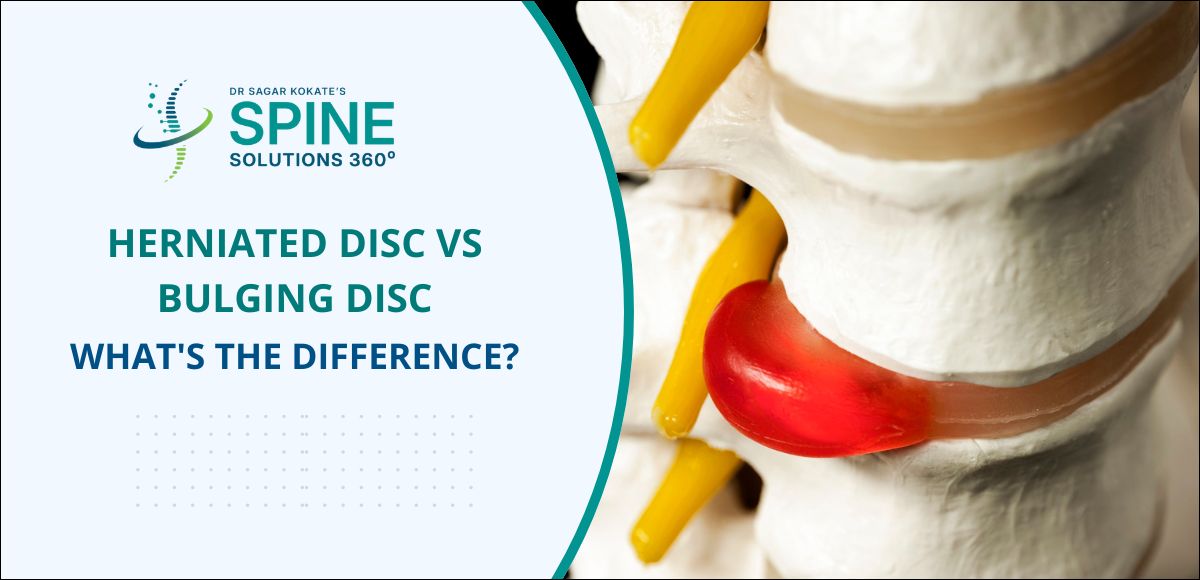
Herniated Disc vs Bulging Disc: What’s the Difference?
Back pain can be confusing, especially when an MRI report mentions a bulging disc or herniated disc. Both conditions involve the spinal discs, and they can cause similar symptoms such as back pain, stiffness, numbness, or pain travelling down the leg. However, they are not exactly the same.
Understanding the difference can help you make sense of your diagnosis and know when you should consult a spine specialist.
What Is a Spinal Disc?
Your spine is made up of a series of bones called vertebrae. Between most of these bones are soft, cushion-like structures called intervertebral discs. They act as shock absorbers and allow the spine to move comfortably.
Each disc has a tough outer layer called the annulus fibrosus and a softer, gel-like centre called the nucleus pulposus. Age-related changes, repeated strain, poor posture, injuries, or heavy lifting can cause the disc to change shape or become damaged.
What Is a Bulging Disc?
A bulging disc occurs when the disc extends beyond its normal boundary. The outer layer remains relatively intact, but it becomes wider or protrudes outward.
Think of it like pressing down on a partially filled balloon—the entire surface may bulge outward without developing a major tear. Many bulging discs do not cause symptoms. However, if the bulging disc presses against a nearby spinal nerve, it may result in:
- Lower back or neck pain
- Pain radiating into the leg or arm
- Tingling or numbness
- Muscle weakness
- Difficulty with certain movements
Bulging discs are also commonly associated with the natural ageing process and may be discovered incidentally during an MRI.
What Is a Herniated Disc?
A herniated disc occurs when a crack or tear develops in the outer layer of the disc, allowing some of the inner gel-like material to push through.
Because the displaced disc material can come into contact with nearby nerves, a herniated disc may cause more pronounced nerve-related symptoms in some people.
Depending on where the herniation occurs, symptoms may include back or neck pain, sciatica, numbness, tingling, or weakness in an arm or leg.
However, having a herniated disc does not automatically mean you will need surgery. Treatment depends on the severity of symptoms, nerve involvement, and how you respond to conservative treatment.
Herniated Disc vs Bulging Disc: Key Difference
The main difference is how the disc changes shape.
With a bulging disc, the disc generally protrudes outward while the outer covering remains intact. With a herniated disc, a tear or crack in the outer layer allows the inner material to move beyond its normal position.
In simple terms, a bulging disc is more like a disc that has expanded outward, while a herniated disc involves displacement of the inner disc material through a damaged outer layer.
The severity of symptoms cannot always be determined simply by whether a disc is bulging or herniated. A small disc problem in the wrong location can cause significant nerve pain, while a larger abnormality may cause little or no discomfort.
What Causes These Disc Problems?
Several factors can contribute to disc changes, including:
- Age-related wear and tear
- Poor posture
- Repetitive bending or twisting
- Improper lifting techniques
- Sudden injuries
- Prolonged sitting
- Weak core muscles
- Excess body weight
- Smoking
Not every person with a bulging or herniated disc develops symptoms. Your symptoms depend largely on whether nerves or other structures are being affected.
How Are They Diagnosed?
A spine specialist usually begins with your medical history and a physical examination. If symptoms suggest nerve compression or do not improve with initial treatment, imaging such as an MRI scan may be recommended.
An MRI can help identify disc bulges, herniations, nerve compression, and other spinal conditions. Importantly, MRI findings should always be interpreted alongside your symptoms and examination rather than considered in isolation.
How Are Bulging and Herniated Discs Treated?
Treatment depends on your symptoms and the severity of nerve compression. Many patients improve with non-surgical approaches such as activity modification, physiotherapy, prescribed medicines, posture correction, and exercises designed to improve spinal strength and flexibility.
If pain persists, symptoms worsen, or significant nerve compression is present, a spine specialist may discuss additional treatment options. Surgery is generally considered when appropriate conservative treatment does not provide relief or when there is significant neurological involvement.
When Should You See a Spine Specialist?
Persistent back or neck pain, pain travelling into an arm or leg, recurring numbness, or muscle weakness should not be ignored. Seek prompt medical evaluation if symptoms are severe, worsening, or affecting your daily activities.
For patients looking for a spine specialist in Thane, Dr. Sagar Kokate provides evaluation and management of various spine and disc-related conditions. A proper diagnosis can help identify the cause of your pain and guide an appropriate treatment plan rather than relying solely on an MRI report.
Frequently Asked Questions
1. Is a bulging disc worse than a herniated disc?
Not necessarily. Symptoms depend on the location and whether nerves are compressed.
2. Can a bulging disc become a herniated disc?
A disc can undergo further degeneration or develop a tear, but progression varies from person to person.
3. Can a herniated disc heal without surgery?
Yes. Many cases improve with appropriate non-surgical treatment and time.
4. Is walking good for a herniated disc?
Gentle walking may be beneficial for many people, but activities should be guided by symptoms and medical advice.
5. When does a disc problem require surgery?
Surgery may be considered when significant nerve compression, persistent symptoms, or neurological problems do not respond adequately to conservative treatment.